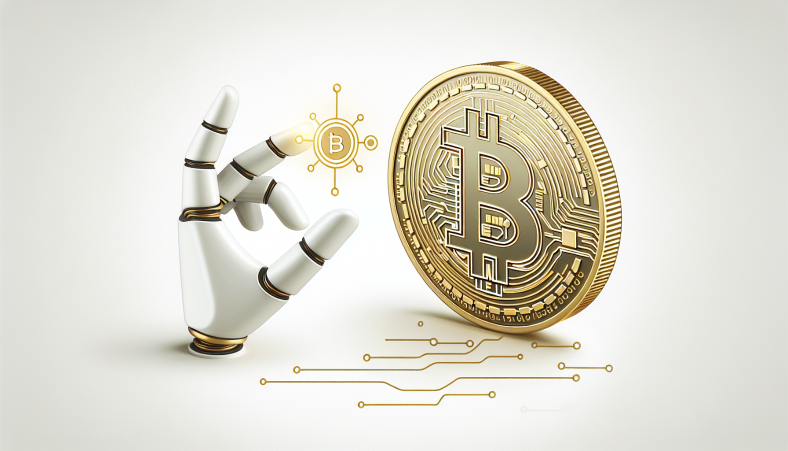
For the past decade, if you mentioned "cryptocurrency" to an average person, the words that most likely came to mind were: get rich quick, being exploited, hacking, or some incomprehensible geek toy. From the sudden emergence of Bitcoin (BTC) to the smart contract revolution of Ethereum (ETH), and the clamor of various public chains and stablecoins, the world has been noisy for over a decade. Countless brilliant minds and massive amounts of capital have poured into it, attempting to build a decentralized utopia. But we are still confused in real life: besides being a highly volatile speculative asset, besides buying low and selling high on exchanges, what is the actual use of cryptocurrency? When we go downstairs to buy a cup of coffee, we still use WeChat Pay and Alipay; for cross-border transfers, we still have to go through cumbersome bank wire transfers. It claims to be disrupting finance, yet it seems to be unable to even do the most basic "payment" well. Until today, with the arrival of the A2A (Agent to Agent) smart economy, this confusion has finally been answered: cryptocurrency has not failed; it has simply been targeting the wrong users over the past decade. When Satoshi Nakamoto released the Bitcoin white paper in 2008, the title was prominently displayed: "A Peer-to-Peer Electronic Cash System." His initial intention was to create an everyday payment tool. In 2010, a programmer named Laszlo used 10,000 Bitcoins to buy two pizzas. This was considered a great beginning for cryptocurrency payments. However, the subsequent story went to the other extreme. There are three insurmountable real-world obstacles preventing cryptocurrencies from becoming everyday currencies: First, volatility. When something is worth $1 today but might drop to $0.50 or rise to $2 tomorrow, no one dares to use it to price their money. There's a common-sense principle in economics called "good money is hoarded," and when you expect Bitcoin to rise, you're definitely not going to use it to buy pizza. Second, the counterintuitive experience. Humans are extremely averse to trouble. Crypto payments require you to carefully safeguard a long string of seemingly random private keys; once lost, your assets are instantly wiped out, and there's no customer service to help you recover them. You also need to understand what gas fees are and endure long waits during network congestion. Finally, there's regulation and taxation. In many countries, buying a cup of coffee with cryptocurrency is considered an "asset sale" by the tax authorities, requiring you to calculate and declare capital gains tax. What humanity needs are stable, simple financial services with customer support and legal protection. While there are frictions between traditional banking and the fiat currency system, they perfectly meet humanity's need for security.Cryptocurrencies attempt to pull humanity into a cold, absolutely rational world of code where risk is borne by the user, but this has naturally been rejected by humanity, ultimately degenerating into a kind of "digital gold" and speculative bargaining chip. But what if we shift our perspective from "human" to "machine"? In an A2A intelligent economy, hundreds of millions of AI agents will be calling each other's APIs, purchasing computing power, acquiring data, and even negotiating rental agreements for you every day. Coinbase's CEO once astutely pointed out: "AI can't open a bank account with an ID card, but they can control a crypto wallet without any obstacles." For AI agents, the advantages of the traditional financial system are all disadvantages, while the disadvantages of cryptocurrency are all advantages. Machines don't need customer service; they only trust code. Traditional contracts require lawyers to draft, courts to enforce, and banks to settle, taking days or even months. In the world of agents, they use "smart contracts"—essentially a program stored on the blockchain. When conditions are met, funds are automatically transferred instantly, and no one can default. This is the true "machine-native contract." Machines require millisecond-level micropayments. Imagine an AI agent generating a report for you. It needs to purchase a piece of real-time data from another agent for $0.001. Traditional credit card networks charge a $0.30 fee per transaction, making such a microtransaction impossible. However, through an encrypted network, the agent can complete the settlement at extremely low cost within milliseconds. Machines have no borders and no identities. They don't require complex KYC (Know Your Customer) verification. With just a private key, an agent running on a Singapore server can instantly pay an agent running in Tokyo. In the original design of the HTTP protocol, there was actually a status code called 402 Payment Required. Internet pioneers foresaw that the future network would not only transmit information but also value. However, due to the lack of a native internet payment layer at the time, this 402 status code was shelved for 30 years, almost never actually used. Until 2025, a payment protocol specifically designed for AI agents was born, and it was called x402. Using the x402 protocol, when an agent requests data from another server, if payment is required, the server no longer displays a credit card form that requires human input. Instead, it directly returns a machine-readable "402 Payment Required" instruction. Upon receiving the instruction, the agent instantly uses USDC from its encrypted wallet to complete the payment. The entire process is completed within a few hundred milliseconds, and the data channel is then opened.No registration, no QR code scanning, no password verification. Value flows seamlessly through the foundation of the internet, like data. According to data from blockchain analytics firms, in just a few months from 2025 to early 2026, AI Agents completed hundreds of millions of payments via stablecoins. Cryptocurrencies no longer need to prove themselves superior to Alipay; they have sunk into the depths of the internet, becoming the silent lifeblood of countless machines. But the story doesn't end there. When machines begin to have wallets, to earn and spend money autonomously, how should we, as humans deeply entrenched in the concepts of "cash" and "bank accounts," understand this new form of wealth? What is the relationship between our money and the money of machines? In the past, wealth was explicit and physical. You pulled out a banknote or opened a bank app to watch your balance change; you had a visceral understanding of "spending money." But in the future, wealth will be folded. Imagine hiring an AI Agent to help you manage a social media account. You don't need to pay it a salary; you only need to deposit 100 USDC (equivalent to $100) into its "Agentic Wallet" in the initial stage. Next, this agent begins its autonomous rampage: it pays another data agent 0.05 USDC to obtain trending topics; it pays a graphics agent 0.1 USDC to generate accompanying images; after an article is published, it automatically deposits its advertising revenue share (possibly 0.5 USDC) into its own wallet. In this process, the machine's money flows, earns interest, and is consumed at millisecond speeds within the underlying network. As its human owner, you see none of these densely packed micro-payment transactions. You don't need to understand what x402 is, nor do you need to know what smart contracts are. The only thing you see is a minimalist weekly report from the agent: "This week, you invested $10 and earned a net profit of $50, which has been withdrawn to your fiat bank account." This is the ultimate division of labor between humans and machines in wealth management: machines handle the friction, and humans enjoy the results. Machine money (cryptocurrency) is for circulation; it's a high-frequency, ruthless, and efficiency-driven means of production. Human money (fiat currency), on the other hand, is for experience; it's the ultimate destination for buying coffee, paying rent, and providing a sense of security. Cryptocurrency hasn't eliminated bank accounts; it has merely pushed complex financial transactions a layer deeper. While humans enjoy the ultimate convenience brought by AI at the forefront, in those unseen layers, a financial system specifically for machines is silently reshaping the world's business rules.
The AI Agent Economy: Cryptocurrency’s True Use Case Emerges
In a thought-provoking commentary, Zhou Hang, founder of Yidao Car, presents a paradigm-shifting perspective on cryptocurrency’s role in the emerging A2A (Agent to Agent) smart economy. The article argues that crypto hasn’t failed—it’s simply been targeting the wrong users for the past decade. While humans rejected cryptocurrency as an everyday payment method due to volatility, complex UX, and regulatory hurdles, these very limitations make it perfectly suited for AI agents. This thesis represents a fundamental reframing of crypto’s value proposition and could significantly reshape market dynamics in the coming years.
The Human-Machine Divide in Cryptocurrency Adoption
Zhou accurately identifies the three insurmountable obstacles preventing cryptocurrency from becoming a mainstream human payment method: extreme price volatility, counterintuitive user experience, and complex regulatory/tax implications. These factors have relegated crypto to a speculative asset class rather than Satoshi Nakamoto’s original vision of a peer-to-peer electronic cash system.
However, the article astutely observes that these “flaws” are precisely what make cryptocurrency ideal for machine-to-machine transactions. AI agents don’t require customer service, they trust code over institutions, they can handle complex private key management, and they operate without borders or identity requirements. This creates a perfect alignment between cryptocurrency’s characteristics and the needs of the emerging AI agent economy.
The x402 Protocol and the Birth of Machine-Native Finance
The introduction of the x402 payment protocol represents a significant technological development in this narrative. Reviving the 402 “Payment Required” HTTP status code that was shelved 30 years ago, x402 creates a machine-readable payment system that enables AI agents to transact seamlessly. When one agent requests data from another, the server returns a 402 instruction that the requesting agent can instantly settle using stablecoins like USDC from its wallet—all within milliseconds.
This protocol exemplifies how cryptocurrency can function as the “silent lifeblood” of the internet, operating at a layer invisible to humans but essential for machine interactions. The hundreds of millions of stablecoin payments already completed by AI agents since 2025, as mentioned in the article, provide early evidence of this nascent ecosystem’s traction.
Market Implications and Token Economics
The A2A economy thesis carries significant implications for crypto market dynamics:
-
Stablecoin Demand Surge: As machine-to-machine transactions become the primary use case for cryptocurrency, stablecoins like USDC stand to benefit enormously from increased utility demand. Their price stability makes them ideal for micropayments in AI agent interactions.
-
Blockchain Platform Selection: Blockchain networks capable of handling high-throughput, low-cost transactions will gain competitive advantages. Platforms optimizing for machine-readable payment protocols and smart contract automation may see increased developer activity and transaction volume.
-
Token Utility Evolution: The narrative shift from “digital gold” to “machine-native financial infrastructure” could reshape token valuation models. Tokens with inherent utility in AI agent economies—such as those used for governance, data acquisition, or compute power allocation—may outperform pure speculative assets.
-
Institutional Adoption Pathway: The A2A economy provides a compelling institutional adoption narrative focused on enterprise AI infrastructure rather than retail payments, potentially attracting significant capital from AI companies and tech giants.
Risks and Challenges
Despite the promising thesis, several risks and challenges remain:
-
Theoretical Foundations: The AI agent economy is still in its early stages, with much of the functionality described remaining theoretical rather than proven at scale.
-
Regulatory Uncertainty: As AI agents begin autonomously managing and transferring financial value, regulators may develop new frameworks that could impact the viability of machine-native finance.
-
Security Vulnerabilities: Autonomous agents managing financial assets create new attack vectors. A compromised agent’s wallet could be drained instantly with no recourse for the human owner.
-
Concentration Risks: The A2A economy could concentrate power among a few dominant AI platforms that control agent economies, potentially creating new centralization risks despite the decentralized nature of the underlying blockchain technology.
-
Market Timing Disconnect: The technological vision may outpace market realities, creating a narrative disconnect that fails to translate to immediate token price appreciation.
Investment Opportunities
The A2A economy thesis creates several strategic investment opportunities:
-
Blockchain Infrastructure Providers: Projects developing specialized infrastructure for AI agent economies, including high-throughput blockchains, oracle networks, and interoperability protocols.
-
Payment Protocol Innovators: Teams building machine-readable payment systems like x402, as well as middleware that bridges traditional finance with AI agent economies.
-
Stablecoin Infrastructure: Projects enhancing the stability, scalability, and regulatory compliance of stablecoins positioned as the primary medium of exchange for AI agents.
-
AI-Blockchain Hybrids: Companies developing at the intersection of artificial intelligence and blockchain technology, particularly those creating frameworks for autonomous agent economies.
-
Wealth Management Interfaces: Platforms enabling the “folded wealth” model described in the article, where complex machine-to-machine financial activities are abstracted away from human users who only see net outcomes.
Conclusion
Zhou Hang’s analysis presents a compelling vision for cryptocurrency’s future beyond human speculation. The A2A smart economy represents a paradigm shift where cryptocurrency serves as the financial infrastructure for AI agents rather than attempting to replace traditional human payment systems. This narrative provides a more fundamental value proposition than previous crypto use cases and could drive the next wave of adoption and innovation in the space.
For investors, this thesis suggests a strategic shift toward evaluating cryptocurrencies based on their machine utility rather than human speculation. While the transition to an AI-agent-driven economy will unfold gradually, the early movers in this space may capture significant value as the technological infrastructure evolves and scales. The emergence of machine-native finance doesn’t signal the end of traditional finance but rather the creation of a parallel financial system operating at a deeper layer of the digital economy, where cryptocurrency finally realizes its original purpose as a peer-to-peer electronic cash system—just not for humans.