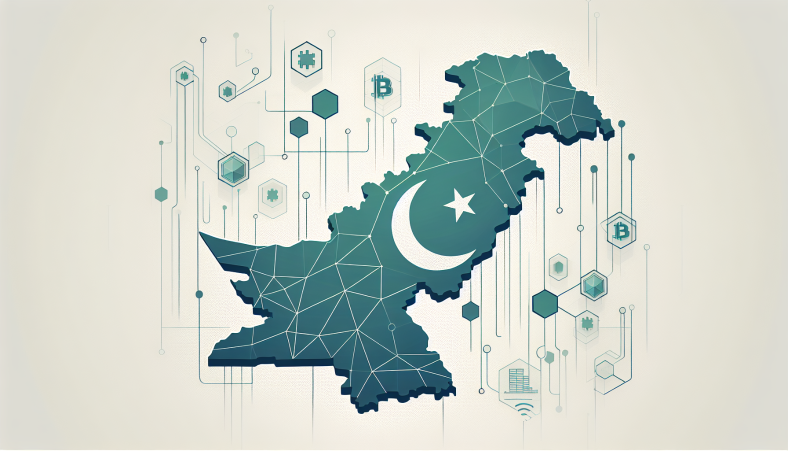
Recently, Pakistan’s Parliament officially passed the Virtual Assets Act and established a national regulatory body—the Pakistan Virtual Assets Regulatory Authority (PVARA). This marks Pakistan’s departure from the ambiguous regulatory gray zone in the digital asset space and its embrace of a systematic legal framework and institutional structure to respond to both technological acceleration and the undercurrents of capital.
Yet the significance of this choice extends far beyond domestic formal recognition and regulatory inclusion. When viewed against Pakistan’s unique geopolitical context—bordering Afghanistan to the northwest, Iran to the west, and the Arabian Sea to the south—its digital asset regulatory pathway sits squarely at the crossroads of three fundamentally distinct institutional frameworks and development models.
Inward “Formal Recognition”: From Unregulated Growth to Rule-Based Order?
The core domestic significance of the Virtual Assets Act and the establishment of PVARA lies in “institutionalization.” First, virtual assets are now explicitly defined in law as a regulated asset class—shedding their previous gray-label status as either “illegal securities” or “gambling tools.” Second, through centralized oversight by PVARA, all core activities—including cryptocurrency exchanges, custodians, wallet service providers, and token issuances—must operate under licensing requirements and comply with comprehensive regulatory standards.
This shift—from “unregulated growth” to a regime where participants can obtain licenses and operate within clearly defined rules—is a direct response to past risks such as exchange collapses and rampant money laundering. More importantly, PVARA has been granted explicit authority to coordinate with anti-money laundering (AML), tax, and national security agencies. This means virtual asset regulation is no longer treated as an isolated technical issue, but rather embedded into Pakistan’s broader financial and national security governance architecture.
Outward Benchmarking: A Strategic Choice Under Geopolitical “Triple Gates”
To fully understand Pakistan’s decision, one must situate it within comparative regional geopolitics:
-
Northwest (Afghanistan): A “Pre-Modern” Zone of Regulatory Vacuum
Afghanistan’s financial system remains fragile, with limited coverage by formal banking networks. Cryptocurrencies exist informally among the public as “alternative financial channels.” Due to political instability and international sanctions, Afghanistan lacks mature, dedicated digital asset legislation—and de facto operates in a regulatory vacuum. Compared to Pakistan’s structured path of “legislation → agency establishment → licensing,” Afghanistan remains stuck in a “pre-regulatory era,” where digital assets risk becoming conduits for illicit fund flows. -
West (Iran): “State Instrumentalization” Under Sanction Pressure
Under severe sanctions, Iran recognized early on the value of cryptocurrencies for cross-border settlement and sanction circumvention. Its policies have historically centered around state-controlled mining and import-related payments. However, its underlying logic treats crypto more as a “national tool” for external pressure resistance—not as the foundation for a market-oriented, investor-protective legal and regulatory ecosystem. By contrast, Pakistan’s approach emphasizes building a compliant ecosystem aligned with international standards. -
South (Arabian Sea): A Gateway to the Gulf’s “Compliance Hub”
Via the Arabian Sea, Pakistan maintains close ties with Gulf financial centers—including the UAE (Dubai and Abu Dhabi) and Saudi Arabia—which are actively cultivating themselves as global crypto compliance hubs, leveraging licensing regimes, regulatory sandboxes, and financial free zones. One end of this corridor hosts capital- and technology-rich jurisdictions; the other opens onto South Asia—a region boasting immense demographic dividends and market potential. By establishing clear rules via PVARA, Pakistan is laying the institutional groundwork for future regulatory mutual recognition and operational collaboration with Gulf partners.
Standing at this “triple intersection,” if Pakistan had continued vacillating between ambiguity and outright prohibition, it would not only struggle to mitigate cross-border risks—but also forfeit influence in the regional digital economy. Choosing to legislate and establish a dedicated regulator reflects an active, dual-track strategy: “benchmarking outward” against international norms and regional financial center frameworks, while “codifying inward” a regulatory system tailored to Pakistan’s own national conditions.
Rising Compliance Costs, Enhanced Long-Term Certainty
For industry players and investors alike, Pakistan’s transformation sends three clear signals:
• The Era of Hard Constraints Has Arrived: Future operations in Pakistan will require adherence to a full suite of mandatory requirements—including licensing, minimum capital, client asset segregation, proof-of-reserves, and disclosure obligations.
• A Shift in Risk Appetite: Compared with weakly regulated jurisdictions like Afghanistan, Pakistan’s compliance costs will rise significantly—but long-term policy uncertainty and operational risk will drop sharply, making it far more attractive to institutional capital and long-horizon projects seeking stability.
• Potential for Regional Integration: With a clear legal framework and a dedicated regulatory authority, Pakistan gains rule-level interoperability advantages when exploring cross-border applications with Gulf partners—such as digital asset-based payment systems and trade finance—opening up new growth opportunities.
At a time when the global crypto landscape is undergoing intense fragmentation, a 240-million-person nation straddling South and West Asia has chosen to anchor itself with a single law and a national institution.
Conclusion: Against the backdrop of deepening global fragmentation in crypto regulation, Pakistan has avoided both extreme prohibition and complete laissez-faire. Instead, through the Virtual Assets Act and PVARA, it seeks a middle path—one grounded in institutionalization and compliance. This choice represents not merely an upgrade to its domestic financial regulatory infrastructure, but also a pivotal strategic repositioning within the geopolitical-economic chessboard. Between the regulatory vacuum to the northwest, the instrumentalized use of crypto to the west, and the compliance-oriented hub to the south, Pakistan is endeavoring to transform itself—from a passive recipient of technological and capital inflows—into an active rule-maker and co-architect of the regional ecosystem. As sovereign capital enters the arena, the jungle law of crypto is increasingly giving way to the logic of geopolitical strategy. And Pakistan has just placed its carefully considered move on the board.
*This article is for informational purposes only and does not constitute any investment advice. Markets involve risk; invest with caution.
[Conflux]
Pakistan’s Virtual Assets Regulation: Strategic Anchoring at the Crossroads of Geopolitical Crypto Models
Pakistan’s legislative passage of the Virtual Assets Act and establishment of the Pakistan Virtual Assets Regulatory Authority (PVARA) represents more than a domestic regulatory pivot—it marks a strategic geopolitical positioning in the global cryptocurrency landscape. This calculated move transforms Pakistan from a peripheral player into an active architect of regional digital asset architecture, situated between three fundamentally different approaches to cryptocurrency regulation.
Market Transformation: From Gray Zone to Institutional Framework
The significance of Pakistan’s Virtual Assets Act extends beyond mere legalization. By formally defining virtual assets as a regulated asset class and mandating licensing for all core participants—exchanges, custodians, wallet providers, and token issuers—Pakistan has established a comprehensive regulatory framework that addresses past vulnerabilities. This institutionalization directly responds to industry failures such as exchange collapses and systemic money laundering risks.
Most notably, PVARA’s mandate to coordinate with AML, tax, and national security agencies signals a sophisticated approach that embeds crypto regulation within Pakistan’s broader financial governance architecture—a critical distinction from many emerging markets that treat crypto as a siloed technical issue.
Geopolitical Significance: The “Triple Intersection” Strategy
Pakistan’s regulatory choice cannot be divorced from its unique geopolitical position. By situated between Afghanistan to the northwest, Iran to the west, and Gulf financial centers across the Arabian Sea, Pakistan’s regulatory framework serves as a strategic counterpoint to three distinct models:
-
Afghanistan’s Regulatory Void: Where informal crypto usage persists without institutional oversight, creating potential illicit finance risks.
-
Iran’s State Instrumentalization: Where crypto serves primarily as a sanctions-evasion tool rather than fostering a market-oriented ecosystem.
-
Gulf Compliance Hubs: Where jurisdictions like UAE and Saudi Arabia are positioning themselves as regulated crypto centers with international standards.
Pakistan’s balanced approach—neither extreme prohibition nor complete laissez-faire—demonstrates strategic sophistication. Rather than aligning with any single model, Pakistan has crafted a hybrid that incorporates international compliance standards while maintaining sovereignty—a calculated move that positions it to potentially benefit from regional integration without succumbing to external pressures.
Investment Implications: Compliance Costs vs. Market Certainty
For market participants, Pakistan’s transformation sends nuanced signals:
-
Short-term pain, long-term gain: While compliance costs will increase significantly compared to unregulated jurisdictions, the reduction in policy uncertainty and operational risk will likely attract institutional capital previously hesitant to enter the market.
-
Regional potential: Pakistan’s 240 million population represents substantial market potential, particularly as remittances and cross-border payments remain critical to the economy.
-
Strategic positioning: By establishing clear rules, Pakistan gains interoperability advantages with Gulf compliance hubs, potentially opening doors for regional collaboration on digital asset-based payment systems and trade finance applications.
However, investors must remain cognizant of implementation challenges. Pakistan’s historical volatility, coupled with regional instability particularly along its western borders, could impact regulatory consistency. Additionally, the strict AML requirements may limit accessibility for retail segments of the market.
Regional Ripple Effects: A South Asian Precedent?
Pakistan’s regulatory approach could serve as a template for other South Asian and Muslim-majority jurisdictions currently grappling with crypto regulation. Unlike India’s prohibitionist stance or Iran’s state-centric model, Pakistan’s balanced approach offers a middle path that prioritizes both innovation and investor protection.
This could potentially catalyze a regulatory race-to-the-top in the region, where other nations follow Pakistan’s lead in establishing comprehensive frameworks rather than maintaining ambiguous positions that ultimately hinder development and increase risks.
Conclusion: Strategic Geopolitical Positioning
Pakistan’s regulatory pivot represents a sophisticated geopolitical play. By establishing clear rules through PVARA, Pakistan is transforming itself from a passive recipient of technological and capital flows into an active rule-maker in the regional digital economy. This positions Pakistan uniquely to benefit from the growing institutional adoption of digital assets while mitigating the risks that have plagued unregulated markets.
As the global crypto landscape fragments along geopolitical lines, Pakistan’s carefully calibrated move offers a template for other nations seeking to balance innovation with stability. For investors, the emergence of a regulated, 240-million-person market at this strategic intersection presents both significant opportunities and thoughtful risks that merit close attention.