Market Update
The total crypto market capitalization is holding steady at $2.50 trillion. Bitcoin is flat over the past 24 hours, trading near $70,600, while Ethereum is up 0.6%. Sector performance was mixed, with SocialFi and RWA gaining 2% and 1% respectively, as the AI sector declined by 2%.
US Lawmakers Reach Key Agreement on Stablecoin Legislation
A significant political hurdle for U.S. crypto regulation has been cleared, as key senators and the White House have reached an “agreement in principle” on the treatment of stablecoin yield. This development is a critical step toward passing a market structure bill, as the issue of rewards on stablecoins had been a primary point of contention, pitting banking industry concerns against crypto innovation. For investors, this breakthrough materially de-risks the stablecoin sector, which forms a foundational layer of the entire crypto economy. A clear regulatory framework for stablecoins would increase confidence for issuers like Circle, exchanges that rely on them for liquidity, and the broader DeFi ecosystem.
Nasdaq Gains SEC Approval for On-Chain Stock Settlement
The SEC has given Nasdaq approval to use a blockchain-based system for the settlement of certain stocks, marking a major validation of distributed ledger technology by a core traditional finance institution. While the initiative focuses on back-end, post-trade processes and maintains the role of existing intermediaries like the DTCC, it represents a significant move toward tokenizing real-world assets. The long-term investment implication is the potential for 24/7 stock trading, which would fundamentally alter market structure. This development signals that Wall Street giants are actively integrating blockchain rails, creating new partnership opportunities for crypto-native firms and infrastructure providers positioned to bridge traditional and digital finance.
JPMorgan Notes Geopolitical Risk Driving Oil Traders to Decentralized Exchanges
A JPMorgan report has identified a notable trend where traditional asset traders are turning to decentralized exchanges (DEXs) to manage risk. Analysts observed a surge in oil trading volume on the DEX Hyperliquid, which coincided with geopolitical instability in Iran occurring when traditional commodity markets were closed. This provides tangible evidence for a core crypto use case: providing 24/7, uninterrupted market access. The event demonstrates that on-chain perpetual futures are becoming a viable tool for non-crypto investors to gain exposure and hedge positions in real-world assets, which could drive significant institutional volume and capital toward high-performance DEX platforms.
Coinbase Launches Stock Perpetual Futures for Non-US Users
Coinbase has introduced perpetual futures for major US stocks like Apple and Nvidia to its international and institutional clients, advancing its strategy to become an “everything exchange” and compete with decentralized platforms offering 24/7 equity exposure.
Prediction Market Kalshi Raises Over $1 Billion at $22 Billion Valuation
Prediction market platform Kalshi has reportedly raised over $1 billion in a Coatue-led round, valuing the company at $22 billion and signaling massive venture capital confidence in the sector despite ongoing regulatory and legal challenges.
Ledger Appoints New CFO and Opens New York Office, Eyeing US IPO
Hardware wallet firm Ledger has hired a former Circle executive as its new CFO and opened a New York office, strategic moves that support its institutional expansion and reported exploration of a potential U.S. initial public offering.
Grayscale Files for ETF Tracking Decentralized Exchange Token HYPE
Grayscale has filed an application for a spot ETF that would track HYPE, the native token of the decentralized perpetuals exchange Hyperliquid, adding to a growing list of issuers seeking to provide investors with regulated exposure to prominent DeFi assets.
Executive Summary (TL;DR)
The US regulatory breakthrough on stablecoins represents a critical turning point for institutional adoption, while Wall Street’s blockchain integration creates a convergence of traditional and digital finance that will fundamentally reshape market structures.
The Core Friction
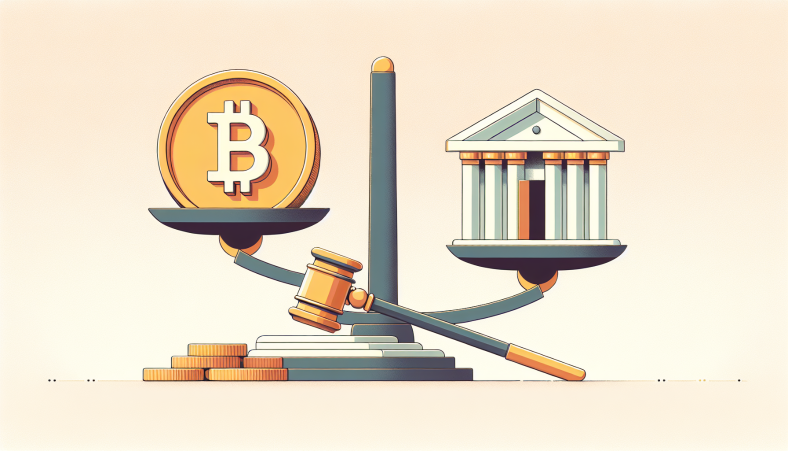
The stablecoin agreement reveals the underlying tension between banking industry protectionism and crypto innovation. The “agreement in principle” on yield treatment suggests regulators are acknowledging that complete prohibition of returns would cripple the utility of stablecoins. This reflects a pragmatic realization that the crypto economy needs functional monetary instruments, but within a controlled framework that maintains traditional banking oversight. The real friction isn’t about technology but about preserving regulatory authority over money creation and distribution in the face of decentralized alternatives.
Market Impact & Chain Reaction
Short-term
The stablecoin sector will likely rally as de-risking becomes material. Circle (USDC) and other compliant issuers gain first-mover advantage. DEX protocols that rely on stablecoin liquidity pools will see increased institutional flows. The Nasdaq blockchain settlement approval validates existing tokenization infrastructure, potentially benefiting companies like Chainlink or Polygon that provide the underlying technology.
Mid-term
This regulatory clarity accelerates the tokenization of real-world assets as traditional finance embraces blockchain rails for settlement. The convergence between Coinbase‘s centralized perpetual futures and DEXs like Hyperliquid creates a new competitive landscape where the winner may be those who best blend regulatory compliance with decentralized principles. Prediction markets like Kalshi, now valued at $22B, signal massive VC confidence in the future of financial markets, suggesting traditional derivatives will migrate on-chain.
RichSilo Verdict
Smart money should position for the inevitable convergence of CeFi and DeFi as regulatory frameworks emerge. Monitor stablecoin issuers that successfully navigate the new compliance requirements while maintaining competitive yields. The real opportunity lies in infrastructure providers that can bridge traditional and digital finance settlement systems, particularly those with existing Wall Street partnerships. Watch for the next wave of tokenized real-world assets as Nasdaq’s blockchain settlement system potentially expands beyond just post-trade processes to tokenization of equities themselves.