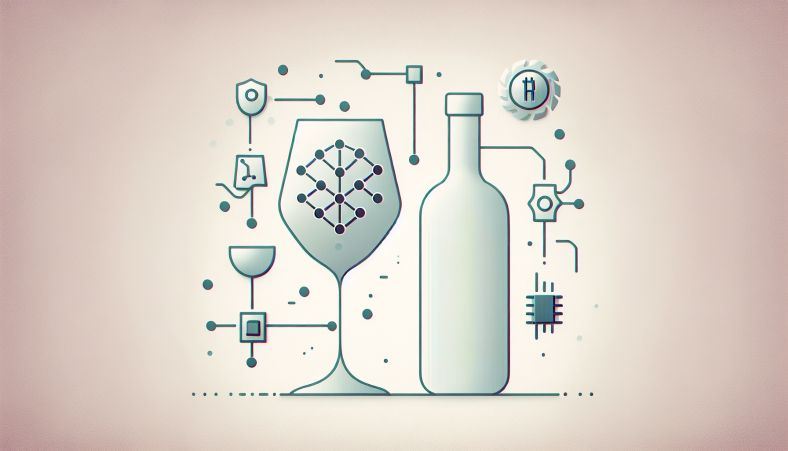
In the peat warehouses of Islay, Scotland, master distillers lean over oak barrels, using centuries of experience to judge the maturation of whisky. At the same moment, in a laboratory in Mountain View, California, an artificial intelligence model is analyzing data maps of over 100,000 flavor compounds, attempting to generate the perfect recipe for the next disruptive craft beer.
These two seemingly parallel worlds are now undergoing an unprecedented collision and integration. This is not just a transition between the old and new worlds, but also a profound transformation concerning taste, trust, and creative rights. As algorithms begin to determine flavor, and as blockchain gives each bottle of wine an immutable digital identity, the wine and spirits world we know, which relies on terroir, craftsmanship, and generations of secrets, is being recoded.
This article will analyze how AI and blockchain technologies are deconstructing and reshaping this ancient industry across the entire chain, from production and distribution to consumer experience, and explore the fundamental questions about authenticity, authority, and culture behind this transformation.
Part 1: AI as “Chief Flavor Officer” – From Auxiliary Tool to Creative Subject
The role of artificial intelligence in the wine and spirits industry is rapidly evolving from a behind-the-scenes “data analyst” to a front-line “flavor architect.” This shift is reshaping the industry’s production logic on three key levels.
At the source of flavor development, AI is no longer content with optimizing existing processes but is beginning to conduct original exploration. By using machine learning models to analyze massive amounts of data—including weather records, soil composition, chemical components of award-winning wines over the years, and even flavor reviews on social media—AI can identify subtle correlations that are difficult for human senses to detect.
Some cutting-edge wineries are using generative AI models to explore flavor combinations that do not exist in traditional recipes, such as algorithmically pairing the ester aromas of specific tropical fruits with the tannin structure of ancient grape varieties to create unprecedented “digital native” flavor profiles. This directly challenges the absoluteness of the concept of “terroir,” raising a new question: when flavor can be detached from specific land and “designed” solely through data modeling, where is the soul of the so-called “place of origin”?
In the supply chain and quality control环节, AI brings a revolution of certainty and efficiency. Quality control, which traditionally relies on experienced masters using “observation, smelling, questioning, and feeling,” can now be achieved through continuous digital monitoring using hyperspectral imaging and sensor networks. AI systems can analyze the microbial activity in fermentation tanks in real-time, predict and intervene in possible flavor deviations; and can detect the liquid level, capping, and label defects of each bottle on the bottling line at millisecond speeds.
This shift from “sampling inspection” to “full-volume perception” not only greatly reduces losses but also establishes an unprecedented full-chain flavor consistency guarantee system.
Perhaps the most disruptive aspect is that AI is becoming an “external brain” for individual palates. The core of intelligent recommendation platforms like Pix.wine is no longer the simple logic of “people who bought A also bought B,” but the construction of complex user context models. It can understand what you want to celebrate today, what food to pair with, and even perceive the adventurous or nostalgic emotions you vaguely reveal, thereby selecting the “destined” wine from a global database.
This hyper-personalized service transforms wine tasting from a specialty that requires long-term accumulation into a democratized, instantly available pleasure. However, this also raises a hidden concern: as our tastes are increasingly shaped and satisfied by a few algorithms that dominate the market, will the diversity of global drinking culture quietly move towards a data-driven, hidden homogenization?
Part 2: Blockchain – Casting a “Digital Soul” for Every Glass of Wine
If AI is reshaping the internal flavor and manufacturing logic of wine, then blockchain is redefining the external identity and circulation value of wine. It solves the deep-rooted trust pain points in this industry.
Anti-counterfeiting and traceability are the most intuitive applications of blockchain. Solutions like Chai Vault create a unique “digital twin” for each bottle of high-end wine or whisky by writing key information (origin, year, batch, circulation record) into an immutable distributed ledger. Consumers can instantly verify its authenticity and trace its complete journey from oak barrel to shelf by simply scanning the QR code or NFC chip on the bottle.
This completely shatters the survival space for counterfeiters, but its significance for the industry goes far beyond that. It transforms a bottle of wine from a static commodity into a dynamic digital asset that carries rich narratives and historical witness. When you taste a bottle of Château Cheval Blanc from 1961, you are not only tasting the wine but also the legendary story of its sixty years of circulation, confirmed by blockchain.
The natural extension of this logic is NFTs and digital assetization. A bottle of top-quality vintage wine can be tokenized, with its ownership existing in the form of an NFT, which can be divided, traded, or used as financing collateral on specialized platforms. This means that the fine wine investment market, which was originally very high-threshold and illiquid, can be opened to a wider range of investors.
Even more imaginative is that brands can issue digital collection NFTs that are tied to physical wines or completely independent. These NFTs may represent an exclusive experience of dining with the winemaker, ownership of a virtual vineyard, or priority purchase rights for a future batch of products. They not only create new revenue streams but, more importantly, build a deeply bonded, continuously interactive brand fan community and value ecosystem.
Blockchain technology ultimately fosters new business models. Smart contracts can automatically execute complex royalty sharing agreements, ensuring that the original winery or artist receives revenue from every secondary market transaction. Blockchain-based supply chain finance enables suppliers at all stages to obtain financing more conveniently based on reliable transaction data on the chain. The economic system of the entire industry is becoming more transparent, efficient, and scalable as a result.
Part 3: Future Scenarios and Ethical Challenges – What Exactly Are We Toasting To?
The rapid advancement of technology forces us to return to some fundamental philosophical and ethical questions. When the contents of our glasses are increasingly defined by algorithms and code, what exactly are we enjoying? The first and foremost is the crisis of “authenticity.”
Suppose an “algorithm champagne” designed entirely by AI and precisely synthesized in a bioreactor consistently beats a traditional product from a famous estate in the Champagne region of France in double-blind tests in terms of the density of bubbles and the layering of floral and fruity aromas. Does the former deserve the name “Champagne”? How should its value be measured—by the complexity of its chemical composition, or by the “terroir” and “human” narratives it lacks? This shakes the cultural foundation on which the industry relies.
What follows is the risk of algorithmic hegemony facing cultural diversity. The taste preferences of global mainstream wine review systems and big data platforms will inevitably affect the training of AI models. When wineries tend to produce products that conform to “mainstream algorithm tastes” in order to obtain higher algorithm recommendation scores and better market prediction data, will those niche, local, and counter-trend unique flavors gradually disappear? Will the democratization of taste come at the expense of flavor diversity?
Finally, there is the repositioning of the role of people. In the context of AI and blockchain, what roles will future winemakers, sommeliers, and wine tasters play? They may be liberated from repetitive physical labor and basic quality control, evolving into “flavor curators,” “brand storytellers,” and “immersive experience designers” who work in collaboration with AI. Their core value will no longer be in mastering some mysterious knowledge or skill, but in providing emotional connections, cultural interpretations, and creative inspiration that algorithms cannot generate. The art of humans and the science of technology will find a new balance in this transformation.
A future landscape of the wine and spirits industry, a beverage mixed with data and humanity, is not an either-or substitution, but more like a complex, tension-filled “blend and aging.” What we hold in our glasses will be filled with both the gifts of sunshine and rain and the warmth of the craftsman’s hands, as well as the precision of data algorithms and the light of trust given by blockchain. Technology does not bring the end of tradition, but its expansion and deepening. It allows us to protect the most precious parts of tradition (such as authenticity and craftsmanship) in a more reliable way, while exploring new frontiers of flavor and experience with a more open attitude.
The real challenge lies in whether we can still maintain and cherish that eternal emotion of humanity—about land, time, and gathering—while enjoying this cup of the future brewed by technology. As ancient cellars begin to talk to the latest server rooms, a profound discussion about how we define a good life has already spread with the aroma of wine. What the taste of this future brew will ultimately be depends on us—these brewers, drinkers, and thinkers—how we blend the rationality of technology with the sensibility of humanity into a unique flavor of this era.
[futuredrinksexpo]
When Code Meets Cork: The Blockchain-NFT Beverage Market Revolution
The ancient beverage industry, long characterized by tradition, craftsmanship, and geographic specificity, is experiencing a technological metamorphosis through the convergence of AI and blockchain. For crypto investors, this represents not merely an intriguing cultural shift but a substantial market opportunity with multiple vectors for value creation and innovation.
Market Disruption: From Tradition to Tokenization
The most immediate investment opportunity lies in the NFT tokenization of high-value beverages. This isn’t merely a novelty application but a fundamental restructuring of an estimated $400+ billion global spirits market and $300+ billion wine market. By converting physical bottles into digital twins through blockchain, we’re creating:
-
Liquidity Transformation: Traditionally illiquid assets like rare vintage wines and aged whiskies can now be traded 24/7 globally, fractionalized, and used as collateral. Platforms like Vinovest and NFT marketplace collaborations with major spirits producers are just the beginning.
-
Anti-Counterfeit Infrastructure: The beverage industry loses an estimated $1.3 billion annually to counterfeit wines alone. Blockchain solutions like Chai Vault and Arianee create verifiable provenance that could become industry standard, particularly for high-value segments.
-
New Revenue Streams: Brands are discovering that digital NFTs—whether tied to physical bottles or as standalone digital collectibles—represent untapped revenue. These can include exclusive experiences, virtual ownership of vineyards, or future product rights.
Investment Vectors and Market Opportunities
NFT Marketplaces & Infrastructure
Specialized marketplaces for beverage-related NFTs will likely emerge beyond general platforms like OpenSea. These could incorporate:
– Advanced provenance tracking
– Temperature and condition monitoring via IoT integration
– Automated smart contract executions for secondary sales
The success of platforms like Tezos-based Objkt.com in specialized NFT categories suggests room for verticalized beverage marketplaces with superior user experience for this demographic.
Supply Chain & Traceability Solutions
The beverage industry’s complex supply chain—from grape to glass—presents multiple pain points addressable through blockchain:
- Raw Material Sourcing: Verifying organic certifications, fair trade practices, and geographic origin
- Production Transparency: Documenting fermentation conditions, aging processes, and blending details
- Distribution Tracking: Monitoring storage conditions, transport routes, and chain of custody
Projects like IBM Food Trust demonstrate the technical feasibility, while beverage-specific implementations could capture significant market share given the industry’s premium on authenticity and provenance.
AI-Blockchain Integration
The article’s most prescient observation is the emergence of AI as a “flavor architect.” This creates a powerful investment thesis:
-
Data Monetization: AI platforms analyzing flavor compounds, consumer preferences, and market trends could create valuable datasets that become tradeable assets on blockchain marketplaces.
-
Personalization Engines: Blockchain-based recommendation systems that reward users for contributing taste preferences and consumption data, creating a decentralized flavor intelligence network.
-
Quality Control Systems: Combining IoT sensors with AI analysis and blockchain reporting creates tamper-proof quality assurance that commands premium pricing.
Risks and Challenges
Despite the promising narrative, several risks demand investor consideration:
Regulatory Uncertainty
The tokenization of physical beverages exists in a regulatory gray area. Securities regulations may apply to certain beverage NFTs, particularly those representing ownership rights or future revenue shares. The SEC’s stance on NFTs as securities remains unclear, creating potential compliance headaches.
Market Fragmentation
The beverage industry is highly fragmented across regions, price points, and categories. A blockchain solution that works for premium Bordeaux may fail for mass-market beer. This fragmentation requires specialized solutions rather than one-size-fits-all platforms.
Consumer Adoption Barriers
While crypto enthusiasts may embrace blockchain-authenticated beverages, mainstream consumers remain skeptical. The success of these technologies depends on delivering clear value beyond the technological gimmick—whether that’s guaranteed authenticity, enhanced provenance storytelling, or genuine investment utility.
Technical Implementation Hurdles
Creating reliable digital twins of physical products requires robust infrastructure:
– Secure QR codes/NFC chips that can’t be replicated
– Integration with existing supply chain systems
– Scalable solutions for mass-market beverage producers
Market Volatility
The NFT market’s notorious volatility could spill over into beverage NFTs, creating investment instability. This is particularly concerning given the relatively illiquid nature of many physical beverage assets.
Investment Thesis & Outlook
The convergence of blockchain and the beverage industry represents a multi-year growth opportunity with several distinct investment theses:
-
Infrastructure Play: Companies providing the underlying blockchain, IoT integration, and data analytics for beverage tokenization stand to benefit most broadly. These are the “picks and shovels” players in the beverage NFT gold rush.
-
Marketplace Specialization: NFT marketplaces focusing specifically on high-value beverages, wines, and spirits could capture significant transaction fees as this market matures.
-
Data Monetization Platforms: AI-driven analytics platforms that leverage blockchain-verified beverage consumption data could create entirely new revenue streams and insights.
-
Brand Partnerships: Established beverage brands that successfully integrate blockchain and NFTs into their business models could see multiple expansion of their addressable markets.
The long-term outlook depends on whether these technologies deliver genuine value beyond novelty. If blockchain can solve real industry problems—counterfeiting, lack of transparency, illiquidity—then adoption will accelerate. The beverage industry, with its premium on authenticity and provenance, may prove more receptive to blockchain solutions than many other traditional sectors.
For crypto investors, this represents a rare convergence of technological innovation with a massive, established market ready for disruption. The key will be identifying projects that solve real problems rather than merely applying blockchain for blockchain’s sake.
The future of beverages may indeed be mixed with data and humanity, but for investors, it’s a compelling blend of tradition and technological disruption that warrants serious consideration.